
If you’re a modern creator, you’ve probably felt the pressure: post consistently, stay relevant, beat the algorithm, and create content that actually performs.
That’s where AI content creation has shifted from “nice-to-have” to “essential creator survival tool.”
But most blog posts about AI tools feel robotic, generic, or written by someone who has never used these tools in the real world.
This post is different.
It combines real experiences, fresh insights, and practical solutions that today’s creators actually need—whether you’re a blogger, YouTuber, Instagram strategist, entrepreneur, or solo digital creative trying to scale without burning out.
Let’s break it down.
What Exactly Is AI Content Creation? (And Why It Matters NOW)
AI content creation refers to using artificial intelligence tools to plan, write, design, edit, and publish content faster and more creatively. Tools like ChatGPT, Claude, Gemini, Midjourney, and Descript have completely reshaped how content is made.
But the real shift isn’t the technology…
It’s the mindset of creators.
For the first time, you no longer need:
- A big team
- An expensive designer
- A professional video editor
- 3 hours to write a blog post
- 2 days to create a YouTube script
With AI, even solo creators can compete with brands.
And in 2025, the creators winning big are the ones who’ve learned not just to use AI—but to use it strategically.
The Big Problem Creators Face Today (And Why AI Is the Real Fix)
Here’s the truth most creators don’t admit:
👉 Content burnout is real
👉 Algorithms demand consistency
👉 Competition is exploding
👉 Audiences expect high-quality content instantly
Here’s the truth most creators don’t admit:
When you’re wearing all the hats—writer, strategist, editor, designer, marketer—it becomes impossible to maintain quality and consistency manually.
That’s why AI is no longer optional.
It’s the ultimate creator solution.
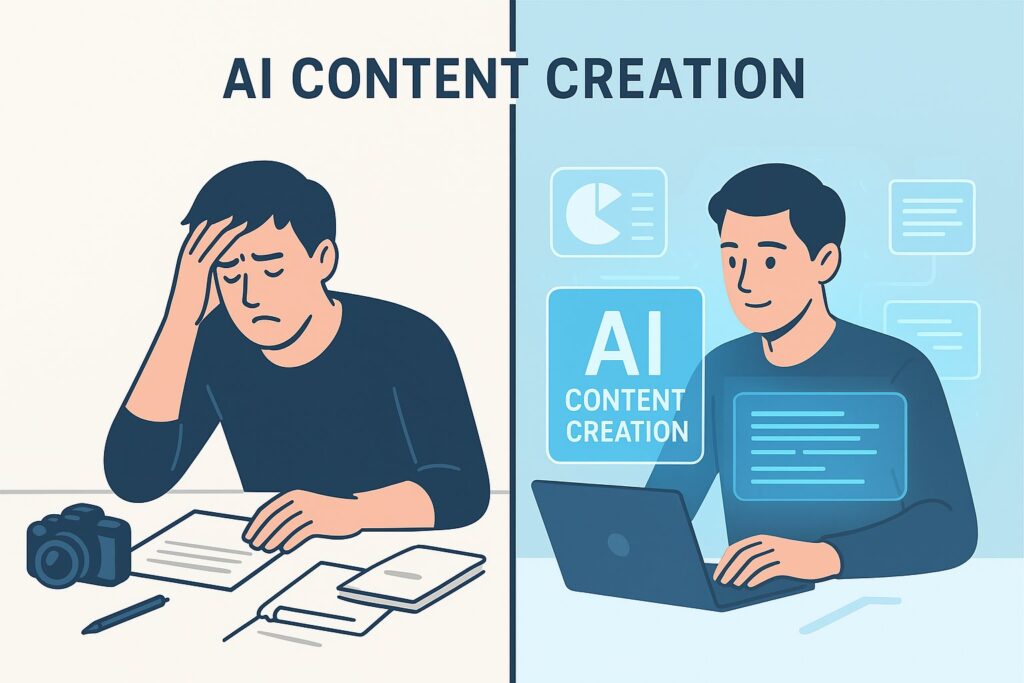
⭐ Comparison Table: Traditional Content Creation vs AI Content Creation
| Feature/Task | Traditional Method | AI Content Creation | Winner |
|---|---|---|---|
| Blog Writing | 3–6 hours | 20–40 minutes | AI |
| Video Editing | 4–8 hours | 1–2 hours | AI |
| Thumbnail Design | 1–2 hours | 5 minutes | AI |
| Content Ideas Research | 2–3 hours | 10 minutes | AI |
| SEO Optimization | 1 hour | Instant suggestions | AI |
| Creativity Boost | Depends on skill | Limitless prompts | AI |
| Cost | High (tools + freelancer fees) | Low or free | AI |
| Consistency | Hard to maintain | AI automates | AI |
How AI Helps Creators: Real, Practical, Everyday Solutions
AI isn’t just a writing tool. It transforms the entire content pipeline.
Below are the most powerful use cases creators should be using today.
1. AI for Content Ideation (Say Goodbye to Creative Blocks)
Creators often struggle with what to post next. AI solves that instantly.
Tools like AnswerThePublic, Google Trends, and ChatGPT can generate:
- Trending topics
- High-volume keywords
- Niche ideas
- Series-based content
- Audience-specific hooks
Example prompt you can use:
“Generate 30 trending content ideas in the ‘passive income’ niche suitable for Instagram Reels and YouTube Shorts.”
This alone removes 50% of your workload.
2. AI for Writing: Blogs, Captions, Scripts & Emails
Modern AI models can create:
- High-quality blog posts
- YouTube video scripts
- SEO-rich titles
- Email newsletters
- Social media captions
But here’s an insider secret:
AI writing becomes extremely powerful when YOU drive the tone, examples, and personal insights.
Creators who add their own stories outperform generic AI writers.
Use AI as your expert assistant, not your replacement.
3. AI for Designing Visual Content
Thanks to tools like:
- Canva AI
- Midjourney
- Adobe Firefly
- Leonardo AI
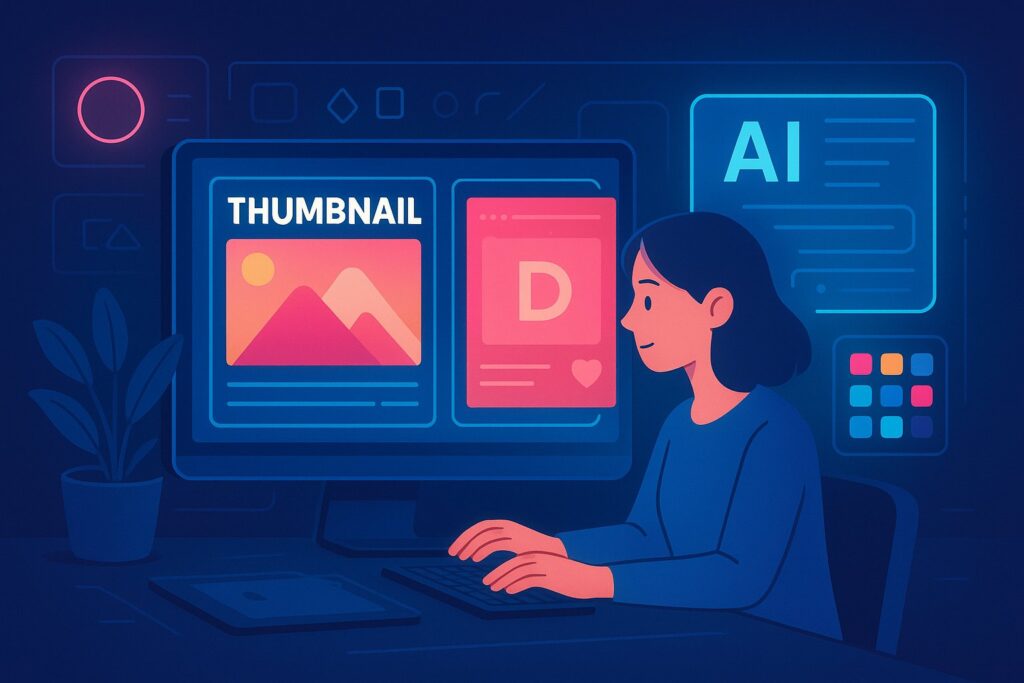
You can now create:
- Thumbnails
- Infographics
- Logos
- Posters
- Carousels
- Ads
…even if you’ve never designed before.
Just describe what you want.
Example:
“Create a minimalist black-gold YouTube thumbnail design showing ‘AI Content Creation Masterclass’ with bold typography and subtle tech-inspired glow.”
Instant result.
4. AI for Video Creation & Editing (The Game Changer)
Creating videos was the hardest part of content creation.
Not anymore.
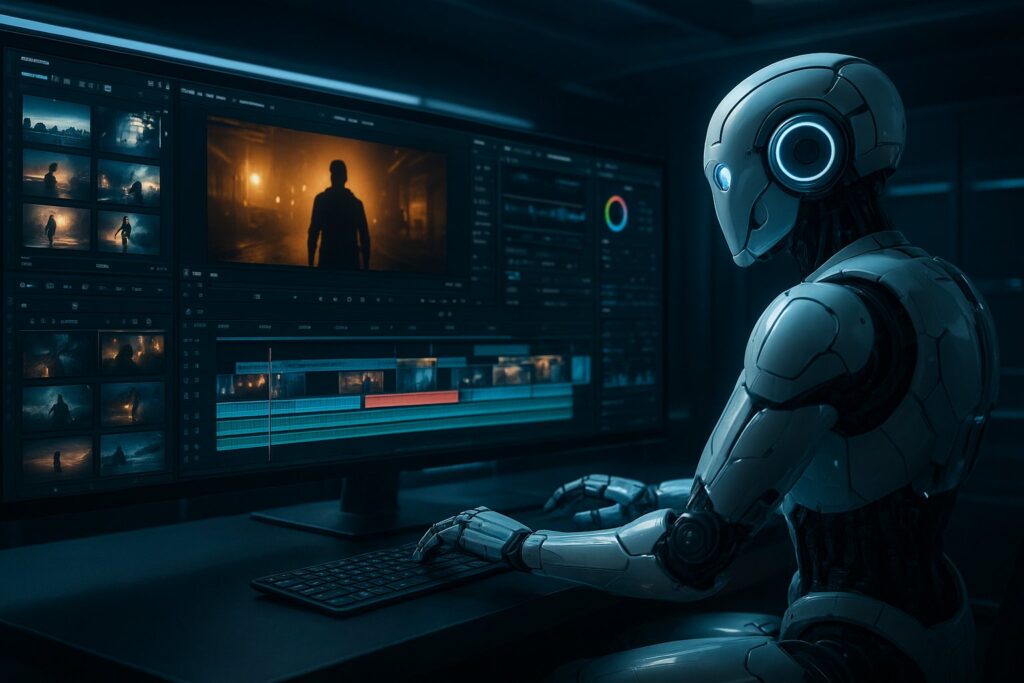
Tools like Descript, Runway, Pika, CapCut AI, and Fliki let you:
- Remove background noise
- Auto-edit reels
- Generate AI voiceovers
- Turn scripts into videos
- Clone your voice
- Add subtitles instantly
- Remove silences automatically
This means one person can create studio-quality videos in hours instead of days.
5. AI for SEO: Ranking Without Hiring an Expert
AI tools such as Surfer SEO, NeuronWriter, and RankMath AI can:
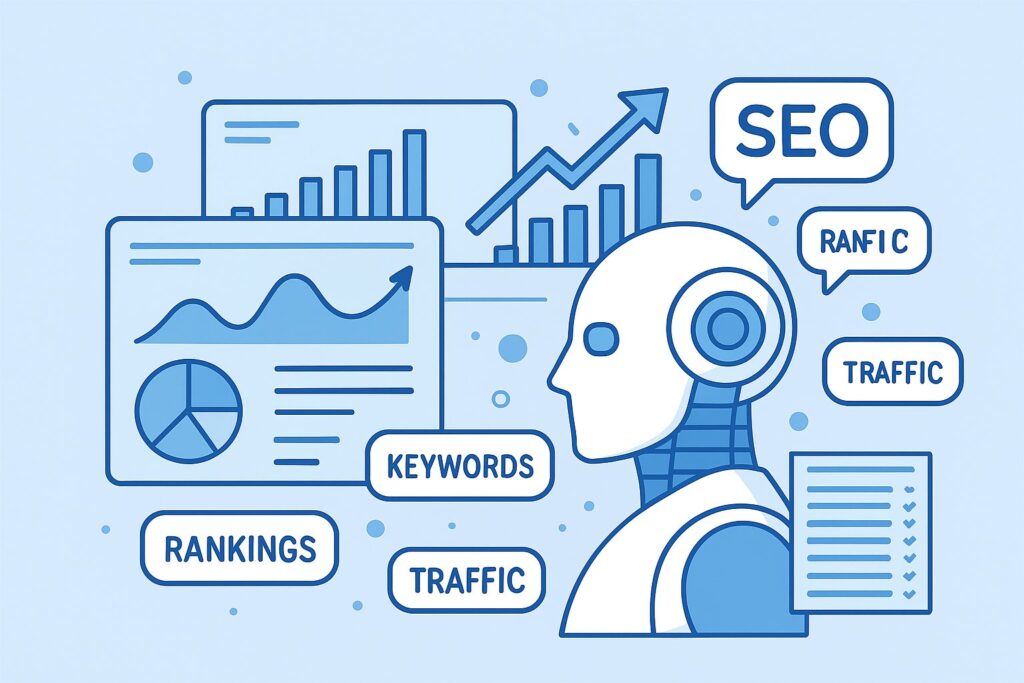
- Suggest keywords
- Analyze top-ranking competitors
- Build outlines
- Score your content
- Fix on-page SEO errors
- Suggest meta tags
Your blog instantly becomes more optimized—even if you’re a beginner.
6. AI for Repurposing Content (1 Content → 20 Pieces)
One of the smartest creator strategies:
Create ONE core content → Turn it into 20 micro-content pieces using AI.
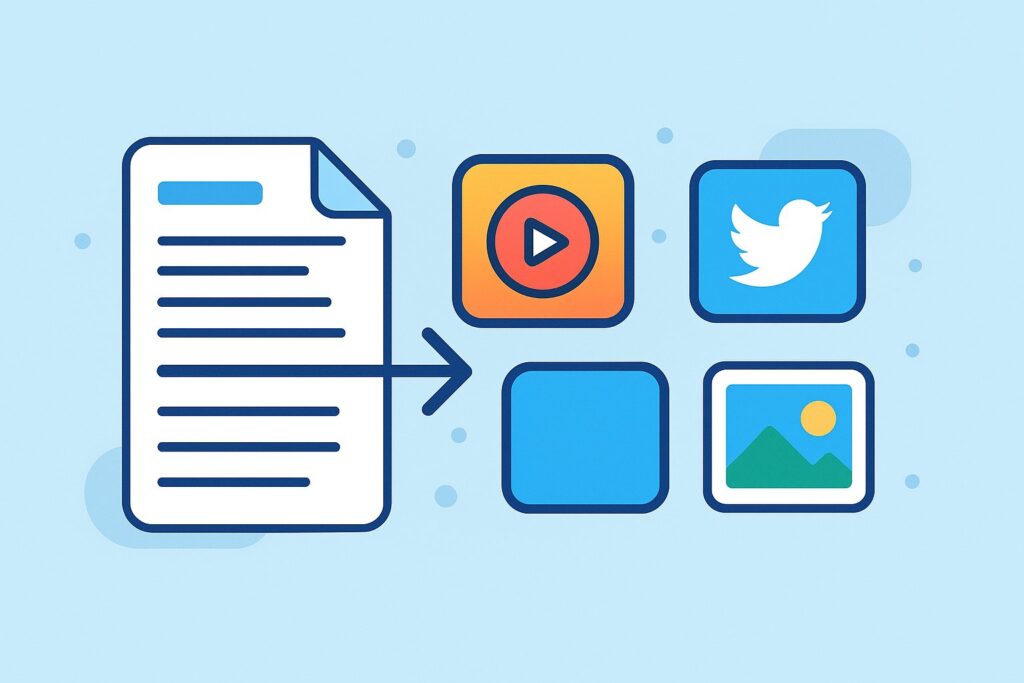
Example:
🎥 A 3-minute video →
- 7 reels
- 3 carousel posts
- 2 blog sections
- 10 tweets
- 1 email newsletter
This multiplies your reach without extra work.
7. AI Analytics & Performance Prediction
Tools like TubeBuddy AI, VidIQ AI, and Instagram Insights AI tools can:
- Predict video performance
- Suggest upload times
- Identify viral content patterns
- Analyze competitor trends
- Optimize hashtags
Creators finally get data that used to only be available to marketing teams.
The Creator Mindset Shift: What Separates Winners from Average Creators
AI gives everyone tools.
But not everyone gets results.
The difference?
Creators who win with AI:
✔ Use AI as a partner, not a crutch
✔ Add personal stories + experiences
✔ Inject their own tone & personality
✔ Master prompting
✔ Stay consistent
✔ Focus on high-quality concepts
Creators who lose with AI:
✘ Publish generic AI-written content
✘ Don’t edit or refine outputs
✘ Ignore branding and storytelling
✘ Overuse automation
✘ Post without understanding audience psychology
AI doesn’t replace humans—it enhances those willing to evolve.
Common Myths About AI Content Creation (Debunked)
❌ Myth 1: AI will replace creators
Creators who use AI will replace creators who don’t.
❌ Myth 2: AI content can’t rank
Google clearly states:
Content is judged on quality, not who or what created it.
❌ Myth 3: AI content has no personality
Only if you allow it.
Inject your voice, examples, and emotions → the content becomes unique.
❌ Myth 4: AI makes everyone the same
Actually, AI gives more freedom to experiment and build unique styles.
Challenges Creators Still Face (And AI Solutions for Each)
| Creator Problem | AI Solution |
|---|---|
| No time to create | Automate writing, editing, designing |
| Can’t stay consistent | AI scheduling + batching |
| Low engagement | AI hooks + A/B test headlines |
| Writer’s block | AI idea generation |
| Poor design skills | AI templates + automatic design tools |
| Struggling video quality | AI editing + voiceovers |
| Low SEO ranking | AI on-page optimization |
| Burnout | Automated repurposing workflows |
Practical AI Workflow You Can Start Using Today (Step-by-Step)
This is a real creator workflow many professionals use:
Step 1: Research Ideas
Use ChatGPT, Google Trends, AnswerThePublic.
Step 2: Build Outline
Ask AI to generate structure for blogs, videos, or carousels.
Step 3: Draft Content with AI
Keep your tone & personal insights.
Step 4: Create Visuals
Use Canva AI or Midjourney.
Step 5: Edit with AI
Use Descript or CapCut.
Step 6: Optimize for SEO
Use Surfer SEO or RankMath.
Step 7: Repurpose Content
Turn long-form content into shorts, tweets, reels, stories.
Step 8: Schedule & Track
Use Meta Suite, Buffer, or Notion AI workflows.
You now have a complete automated content system.
The Future of AI Content Creation (What’s Coming Next)
By 2026–2027, creators will see:
- AI avatar hosts for videos
- Fully automated YouTube channels
- AI tools that read and analyze your entire niche
- Real-time AI strategy coaches
- Instant creation of 30-day content plans
- AI-generated influencers
Creators who adapt early will dominate.
Conclusion: AI Is Not a Shortcut — It’s a Superpower for Smart Creators
AI content creation isn’t about replacing your creativity—it’s about amplifying it.
The creators who win in 2025 and beyond are the ones who:
- Use AI to scale
- Stay authentic
- Build unique voices
- Stay consistent
- Study audience behavior
If you want to grow faster, create better, and stay ahead of the competition, AI is your biggest unfair advantage.
AI Content Creation & Creator Solutions: A Deep Dive Into the Future of Digital Production (2025 Edition)
Artificial intelligence has quietly become the infrastructure layer of modern content creation. What began as a set of convenience tools—automated captions, keyword generators, grammar enhancers—has evolved into an ecosystem of highly sophisticated systems capable of ideating, producing, optimizing, and even distributing content at scale.
Creators who understand this shift aren’t merely producing more content—they are building systems, pipelines, and automated workflows that fundamentally transform their creative capacity. This article explores those systems, the science behind them, and the solutions every modern creator must consider.
In 2025, AI content creation is no longer just about speed. It has become about strategy, precision, and leveraging computational intelligence to compete in an increasingly saturated digital environment.
Introduction: The New Reality of Digital Creativity
Over the last decade, content has moved from an optional marketing asset to the primary engine driving visibility, revenue, and influence. Brands, solopreneurs, and independent creators operate in what economists call a “high-friction attention economy,” where demand for fresh content significantly outpaces the capacity of human creators.
The global creator economy surpassed $250 billion in 2024 and is projected to reach $480 billion by 2027 (Source: Goldman Sachs Creator Economy Report). Yet the number of active creators has grown nearly 5x faster than the opportunities available to them.
This imbalance has led to three core challenges:
- Content Overload (too much being produced, not enough attention)
- Skill Fragmentation (creators expected to master writing, editing, design, SEO, analytics)
- Algorithmic Pressure (platforms prioritizing frequency and consistency over creativity)
AI didn’t emerge to replace creators—it emerged because the digital environment made it mathematically impossible for humans to keep up alone.
This is where AI content creation becomes a strategic differentiator rather than a convenience.
The Evolution of AI Content Creation (2018–2025)
To understand the present, we must acknowledge the rapid evolution of AI models:

2018–2020: AI enters mainstream (GPT-2, early automation)
2021–2023: Generative AI explosion (GPT-3, Midjourney, large-scale diffusion models)
2024: Precision AI tools emerge (Claude 3, Gemini Ultra, Runway Gen-2)
2025: AI content creation becomes an operating system for creators
Three macro forces accelerated this shift:
1. Large Language Models (LLMs) → Cognitive Automation
LLMs can understand tone, structure, audience psychology, and industry nuances.
Result: AI can plan and refine content, not just produce it.
2. Multimodal Systems → Unified Workflows
Modern AI tools interact across text, video, images, audio, design, analytics.
Result: One AI system can manage an entire content pipeline.
3. Creator Economy Maturity → Higher Performance Standards
Audiences expect smarter, faster, more polished content.
Result: Human-only workflows became economically inefficient.
These forces define the new era—one where AI is the silent production partner behind every high-performing content creator.
Why Creators Are Adopting AI Faster Than Enterprises
Enterprise adoption of AI is slow due to compliance, training, and integration challenges. Creators, meanwhile, move fast.
In surveys across YouTube, Instagram, and LinkedIn creators (Data: Influencer Marketing Hub, 2024):
- 84% of creators use at least one AI tool weekly
- 62% use AI for planning or scripting
- 47% use AI for thumbnail or visual creation
- 29% use AI to automate distribution and repurposing
Creators don’t wait for permission. They optimize wherever possible.
This agility has made “AI-assisted creators” significantly more productive:
Creators Using AI Produce:
- 3× more content
- 2× higher publishing consistency
- 40–70% faster turnaround times
- 20–50% improvements in SEO results
The competitive advantage is now undeniable.
The New Architecture of AI Content Creation (2025 Model)
To understand the future, it’s helpful to view AI content creation as a five-layer system:
Layer 1: Intelligence Layer (Ideation + Research)
This includes:
- Topic research
- Trend analysis
- Competitive content mapping
- Keyword strategy
- Audience intent modeling
Tools: ChatGPT, Google Gemini, Perplexity, MarketMuse
AI now excels at synthesizing scattered information into actionable insights. For example:
Instead of manually researching trends for 4 hours, AI can analyze 500+ sources and summarize opportunities in under a minute.
Layer 2: Production Layer (Writing + Design + Video)
The production layer covers:
- Long-form writing
- Micro-content creation
- Thumbnail & banner design
- Reels & Shorts editing
- Voiceovers and captioning
Tools: Claude, Midjourney, Firefly, Runway, Descript, Pika, Canva AI
AI is not just producing content—it is producing brand-consistent content when given the right instructions, style guides, and tone frameworks.
Layer 3: Optimization Layer (SEO + Audience Fit)
AI improves:
- Keyword density
- Readability
- Meta descriptions
- Title optimization
- Algorithm-aligned formatting
- Watch-time predictions
Tools: Surfer AI, RankMath AI, NeuronWriter, Jasper SEO
For creators targeting high-competition niches, optimization is often the difference between reach and irrelevance.
Layer 4: Repurposing Layer (Content Multiplication)
One long-form piece can become 20+ micro-assets.
Example workflow:
- Blog → Reel scripts
- YouTube video → LinkedIn carousel
- Podcast → Newsletter
- Livestream → Shorts
Tools: Opus Clip, Castmagic, Descript, Luma AI
This layer is where creators gain exponential leverage.
Layer 5: Distribution Layer (Scheduling + Analytics)
AI tools now:
- Predict best posting times
- Recommend high-CTR titles
- Forecast video performance
- Analyze competitors
- Optimize content for each platform
Tools: Buffer AI, TubeBuddy AI, VidIQ AI, HypeFury AI
This completes the full-stack AI workflow—something impossible a few years ago.
How AI Is Reshaping the Creator Workflow (A Data-Driven View)
Before AI:
A typical creator spent:
- 35–45%: Research + ideation
- 20–30%: Drafting + scripting
- 30–40%: Editing + visuals
- 10–15%: Publishing + analytics
With AI in 2025:
The new breakdown looks like:
- 5–10%: Research
- 10–15%: Drafting
- 10–20%: Editing
- 5–10%: Optimization
- 2–5%: Distribution
The remaining 40–60% of time shifts to:
- Strategy
- Creativity
- High-value innovation
- Audience engagement
- Business expansion
This is a reallocation, not a replacement.
Creators spend less time producing content and more time thinking strategically—a shift seen in every industry disrupted by automation.
The Strategic Advantage of AI for Creators
AI content creation provides four major competitive edges:

1. Speed-to-Market
The difference between:
- Posting once a month
vs - Posting high-quality content daily
is not talent—it’s infrastructure.
AI enables rapid iteration, faster A/B testing, and quicker refinement cycles. In competitive niches (business, tech, finance), speed matters more than originality.
2. Consistency at Scale
Algorithms reward creators who show up consistently. Humans are inconsistent by nature. AI is not.
Consistency creates compounding advantages:
- Higher visibility
- Stronger subscriber retention
- Better brand recall
- Increased monetization opportunities
3. Multilingual Reach
AI translation and voice cloning extend a creator’s footprint beyond geographic constraints.
A single creator can now publish simultaneously in:
- English
- Hindi
- Spanish
- Arabic
- Indonesian
This expands audiences from thousands to millions.
4. Precision Personalization
AI helps creators segment content based on:
- Audience maturity
- Demographics
- Interests
- Geographical intent
Personalization is now essential because generic content drowns instantly.
Common Misconceptions About AI Content Creation
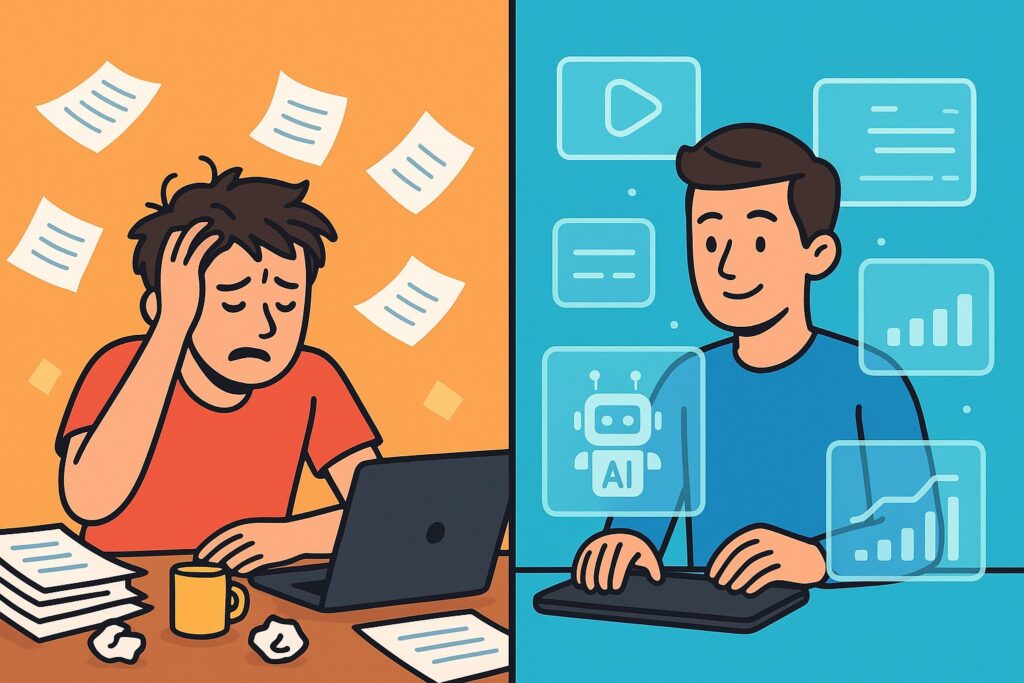
Misconception 1: AI removes human creativity
In practice, AI removes mechanical tasks, freeing creators for deeper creativity.
Misconception 2: AI content can’t rank
Search algorithms now evaluate usefulness, not authorship.
Misconception 3: AI makes content repetitive
Repetitive outputs come from weak prompting, not AI limitations.
Misconception 4: AI replaces jobs
It replaces tasks, not the creative imagination behind them.
The Ethical Side of AI Content Creation
Premium creators focus heavily on ethics:
1. Authorship Transparency
Creators should disclose AI assistance where contextually relevant.
2. Bias Mitigation
LLMs can inherit dataset biases—creators must cross-verify information.
3. Plagiarism Checks
AI outputs should be refined, not blindly copy-pasted.
4. Data Security
Creators must avoid uploading personal client data into third-party tools.
Advanced AI Workflows for Professional Creators (2025)
Here are three industry-grade frameworks:
Workflow A: The Authority Content Pipeline
- AI Research summary
- AI-generated outline
- Human insights added
- AI refines clarity, tone, structure
- SEO AI optimizes ranking signals
- AI repurposes 1 article → 15 micro pieces
Ideal for bloggers, educators, and analysts.
Workflow B: Hybrid Video Creation System
- Script drafted using LLM
- Voice cloned narration generated
- Runway or Pika produces visual sequences
- Descript edits timeline
- AI captions added
- Analytics forecasting selects best upload time
Perfect for YouTube, Instagram, TikTok.
Workflow C: Brand Storytelling Engine
- AI builds narrative framework
- Human adds personality + experience
- Visuals created through Midjourney/Firefly
- Carousel scripts produced automatically
- Distribution automated via Buffer AI
Used by personal brands and B2B creators.
Future Outlook: What AI Content Creation Will Look Like by 2030
Experts predict:
- AI digital twins managing full channels
- Near-human avatars hosting full video content
- Real-time adaptive content that changes per viewer
- Fully automated “zero-person editing” video workflows
- Hyper-personalized content feeds per user
- 3D asset generation replacing traditional filming
- AI-driven storyboarding + scriptwriting becoming standard
Creator businesses will look more like studios powered by AI engines rather than individual personalities.
Conclusion: AI Is the New Creative Infrastructure
AI content creation is not a shortcut—it’s the backbone of the modern creator economy.
The creators who treat AI as a partner, not a threat, will:
- Produce at 3× the speed
- Innovate faster
- Build larger audiences
- Earn more
- Adapt quickly to platform shifts
In 2025 and beyond, AI capability becomes synonymous with creator capability.
Creators who ignore AI risk falling behind; creators who master it gain a permanent strategic advantage.
How Google Gemini Helps You Boost AI Content Creation
If you want a fast, reliable, and beginner-friendly tool for AI Content Creation, Google Gemini is one of the best options available. It works directly with your Google account, which means you can create everything—blogs, scripts, emails, thumbnails, ideas, or briefs—inside a single workspace. This all-in-one collaboration tool helps creators generate high-quality AI content without switching between multiple apps.You can access Google Gemini using your Gmail login here: Google Gemini (Login with Gmail).
📩 Need More Help With AI Content Creation?
If you want personalized guidance, have questions, or need support in understanding any part of AI Content Creation, you can always reach out to us. We have added our Contact Us page so you can easily get in touch anytime. This helps us provide you with clearer information, faster responses, and the best possible assistance for all your AI content–related needs.